Seasonal Event Triggers: How UK Operators Time Limited Perks Around Major Fixtures and Tournaments
Written by Wendy Otto · Sep 24, 2026

Seasonal Event Triggers: How UK Operators Time Limited Perks Around Major Fixtures and Tournaments
UK betting operators coordinate their limited-time offers with the calendars of major sports events, and this practice shapes when free bets, odds enhancements, and deposit incentives appear throughout the year. Data from industry reports show that promotions cluster around the start of the Premier League season, Wimbledon fortnight, and international rugby tournaments because participation rates rise sharply during these periods. Operators track fixture lists months in advance so they can activate time-bound perks that coincide with peak audience attention rather than spreading them evenly across quieter weeks.
Calendar Alignment and Promotion Windows
Operators study annual sports schedules to identify high-traffic windows, and they launch campaigns that run for seven to fourteen days around opening matches or final stages. For instance, when the English football season begins in August, several platforms release matched deposit offers tied specifically to the first round of fixtures, while similar structures reappear in September 2026 as teams enter the second month of competition. Research published by the Australian Gambling Research Centre indicates that such timed releases correspond with measurable increases in account activity across comparable markets.
Grand Slam tennis events create another set of triggers, and operators typically introduce odds boosts on individual matches or accumulators during the two-week duration of Wimbledon or the US Open. These offers often activate at the quarter-final stage when viewer numbers climb, and they conclude once the tournament ends. The same pattern appears around major golf majors and boxing title fights, where limited perks remain live only for the duration of the event itself.
Fixture-Specific Mechanics
Each sport generates its own set of timing rules. Football campaigns rely on weekend match clusters, so operators schedule reload bonuses that expire at kick-off times across multiple leagues. Cricket test series and one-day internationals prompt shorter promotional bursts that last three to five days because the fixture density is lower. Observers note that operators avoid overlapping major events whenever possible, since dividing attention between two simultaneous tournaments reduces the impact of any single campaign.
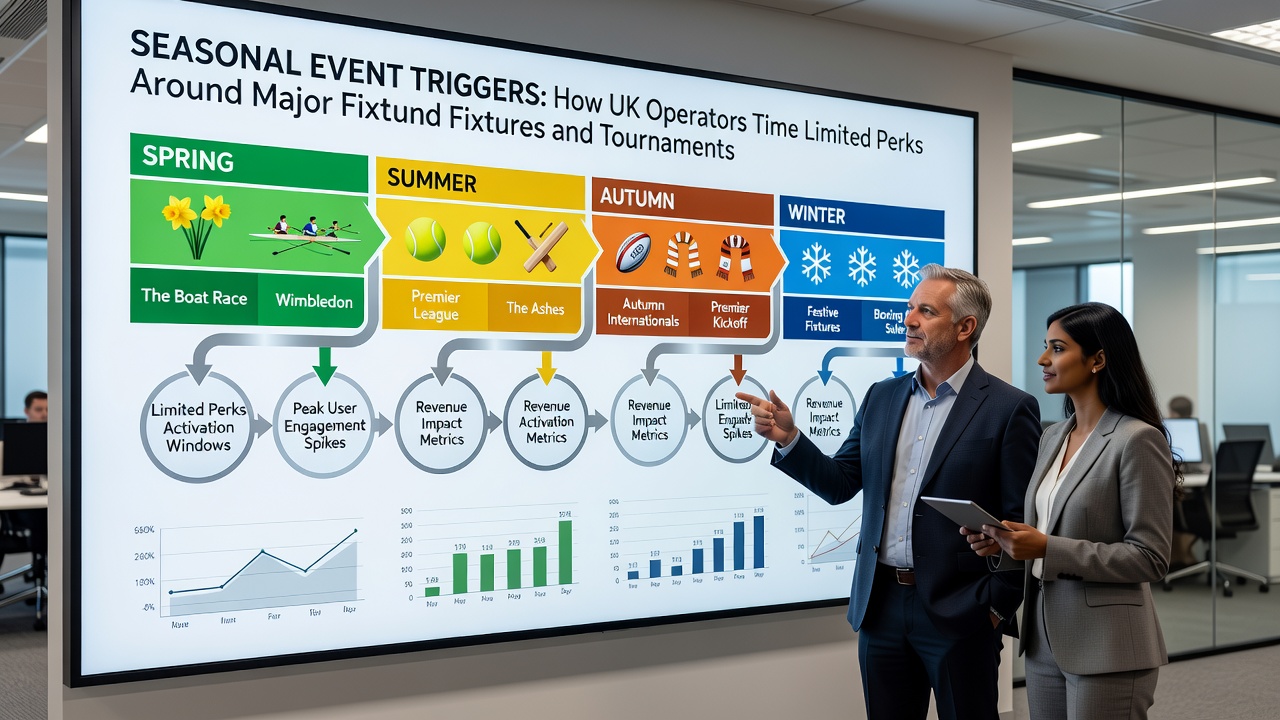
Industry analyses from the National Council on Problem Gambling in the United States highlight that operators in various jurisdictions use similar fixture-based calendars to manage promotional spend. UK platforms apply these lessons by releasing enhanced odds on specific outcomes the day before a high-profile match and withdrawing them once the event concludes. This approach keeps the total number of active offers manageable while maintaining relevance to current sporting action.
Regulatory and Platform Considerations
Operators must comply with advertising standards that govern how and when promotions can be promoted, and these rules influence the exact start and end times of seasonal triggers. Campaigns tied to major fixtures often include clear expiry information because regulators require transparency around limited availability. Platforms therefore publish terms that state the precise window during which a player must place the qualifying bet or deposit, aligning those windows with the event schedule rather than arbitrary dates.
September 2026 will see several overlapping domestic and European competitions, and operators have already begun mapping their promotion calendars to avoid regulatory conflicts during that period. Historical data shows that when two major events run simultaneously, platforms prioritise one tournament for headline offers and use secondary fixtures for lower-value incentives, maintaining a clear hierarchy that matches audience interest levels.
Measurement and Adjustment
Operators evaluate the performance of each seasonal campaign through internal metrics that track redemption rates and new account creation during the promotion window. Adjustments occur for the following season when figures reveal that certain fixtures generated stronger responses than others. For example, early-season football offers sometimes outperform mid-season ones, leading to larger allocations of enhanced odds during August and September periods in subsequent years.
Those who monitor these patterns across multiple platforms report that the timing strategy remains consistent year to year, with only minor shifts when new tournaments enter the calendar or when broadcast schedules change. The underlying principle stays the same: align the availability of limited perks with the moments when public attention on sport reaches its annual peaks.
Conclusion
UK operators have developed a structured approach to seasonal promotions that centres on the predictable rhythm of major fixtures and tournaments. By anchoring limited-time perks to specific events and adjusting windows according to performance data, platforms maintain relevance while operating within established regulatory boundaries. The pattern will continue through September 2026 and beyond as new seasons begin and operators refine their timing based on observed outcomes.